Showing posts with label Reading Response. Show all posts

Saturday, November 11, 2017

Reading Response: What is Comics Poetry


Discuss one work from the examples in the Rothman essay, describe what you think it's about, why you like it, and what you think is the most intriguing or best aspect of the work.


Above is the comic created by Marion Fayolle "The Mirror" and "Fragments", I think its about discovering and understanding yourself suggesting conceptions of self, based on the visual choices it convey gender reconstruction, and possibilities of expression. I like this piece because of the various subjects and messages that are being conveyed to the audience.

I feel like I can relate to this artwork the most because I have experienced taking time for myself to find and understand myself as a person. I took time to understand what it important to me, what I like and dislike, what I can handle or what triggers me, how I see myself, what makes me feel uncomfortable, hurts me and makes me happy, and what I want to focus on and strive to achieve in my life.

What I find the most intriguing is the how the artist chose the male, female characters and the main subject of the mirror which successfully conveys various subjects and messages that are being presented to the audience. It is interesting how the artist depicts a male figure approaching the frame of a mirror. He and his reflection approach each other, bend toward each other, touch. A female figure joins the dance, bends to lift a stone, shatters the mirror and the first figure in one throw. Other female figures join her; they pick up the pieces and reassemble them as collages, reframed in a setting suggesting a type of gallery.

The visual language used helps suggest time, and movement by the colors, characters, and movement of the characters within the comic. Another aspect I found interesting was the fact that the artist did not used words to help narrate what the scene was about, only used titles to name the piece. 


Thursday, October 26, 2017

Reading Response: Green Dreams; Gardens "Eccentric Spaces" by: Robert Harbison


Ha-has (Recessed walls)

This landscape design element can be found near the area surrounding the Washington Monument in Washington, D.C.
The Ha-has wall creates a vertical boundary impediment while sustaining a continuous and unbroken (without obstructing) view of the landscape from afar. The design incorporates a incline which slopes downward to a vertical wall (masonry retaining wall).


Image result for washington memorial monument
Washington Monument


Parco de Mostri

Bomarzo, in the province of Viterbo, northern Lazio, Italy
16th Century

Image result for parco del mostri
 L'Orco Classico

Roman Forum

The Roman Forum was designed by the architect Vitruvius
Rome, Italy

Image result for Roman forum

Image result for Roman forum


Boboli Garden

Architects: Giorgio Vasari, Bernardo Buontalenti, Niccolò Tribolo, Bartolomeo Ammannati
Florence, Italy

Image result for Bobobli gardens


Image result for Bobobli gardens

Ragnaie (spiders lane)


Jardin du Luxembourg

Inspired by the Boboli Gardens in Florence, were created upon the initiative of Queen Marie de Medici in 1612.
Paris, France

Image result for jardin du luxembourg


Image result for jardin du luxembourg


Tivoli Garden

Terraced gardens designed in 1550 by architect Pirro Ligorio for the governor Cardinal Ippolito II d’Este

Tivoli, Lazio, Italy

Image result for tivoli gardens italy


Image result for tivoli gardens italy


Image result for tivoli gardens italy


Bernini's Four Rivers


designed in 1651 by Gian Lorenzo Bernini for Pope Innocent X
Piazza Navona in Rome, Italy


Image result for Bernini's four rivers


Jean Dubuffet's Jardin d'Emaille

Epoxy resin and concrete with polyurethane paints
Made in 1974
Collection: Rijksmuseum Kröller-Müller, Otterlo (Netherlands)

Image result for Jean Dubuffet's Jardin d'Emaille


Image result for Jean Dubuffet's Jardin d'Emaille


Stowe Garden

The landscape garden at Stowe is one of the most remarkable legacies of Georgian England. Created by Viscount Cobham in the grounds of his family home from 1717, it reflected a programme of ideas based on Cobham’s hugely influential network of political affiliations.

Buckinghamshire, England


Image result for stowe garden


Image result for stowe garden


Image result for stowe garden


Stourhead Garden

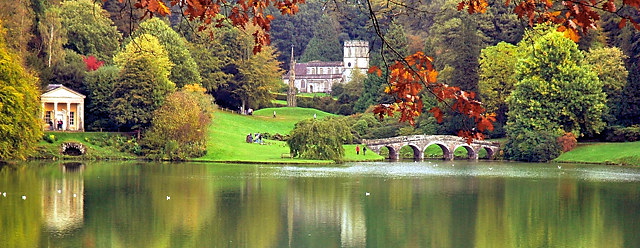
When Stourhead first opened in the 1740s, a magazine described it as ‘a living work of art’. The world-famous landscape garden has at its centrepiece a magnificent lake reflecting classical temples, mystical grottoes, and rare and exotic trees, and offers a day of fresh air and discovery.
Stourhead is a 1,072-acre estate at the source of the River Stour near Mere, Wiltshire, England. The estate includes a Palladian mansion, the village of Stourton, gardens, farmland, and woodland. Stourhead is part owned by the National Trust since 1946.
Wiltshire, England
Image result for stourhead garden


Vizcaya Museum

Vizcaya was created as James Deering’s subtropical winter home in the 1910s and today it is a National Historic Landmark and accredited museum.
Vizcaya Museum and Gardens is a National Historic Landmark that preserves the Miami estate of agricultural industrialist James Deering to engage our community and its visitors in learning through the arts, history and the environment. James Deering chose the location of Vizcaya because he was attracted to the warm weather and hoped it would improve his health.
Paul Chalfin was not a trained architect and, in 1912, Deering hired Francis Burrall Hoffman, Jr. (1882–1980) as Vizcaya’s architect of record. Hoffman developed the plan of the Main House, creating a spatial framework for the decorative elements and artwork that Chalfin and Deering had already collected.
Image result for vizcaya


Related image


Fairchild Tropical Garden

Fairchild Tropical Gardens gets its name from one of the most famous plant explorers in history, David Fairchild (1869-1954). Dr. Fairchild was known for traveling the world in search of useful plants, but he was also an educator and a renowned scientist.
The botanical garden is located in Miami because it is the one place in the continental United States, where tropical plants could grow outdoors year-round. Opened to the public in 1938, Fairchild Tropical Botanic Garden was established on an 83-acre site south of Miami. 

Miami, Florida
Related image


Related image

Image result for fairchild tropical garden


When the author says every garden is a replica he means that a garden is a representation or an attempt to recapture an image. The garden is a replica of the natural environment as another image of art.   
The two poles of gardening are formal gardens and irregular English gardens. The two poles of gardening relate to the gardens of Versailles because the garden depicts two different styles of gardening occurring at the same time creating a juxtaposition within the realm of gardening to demonstrate the approaching Revolution in France. The elephantine stasis or massive and immense state of inactivity shares the grounds with the butterfly charm of the Marie Antionette’s hameau’s natural English garden landscape, a reflection of France's cultural values on the evening before the Revolution.
A feature to describe the Versailles garden is still geometrical without edges, without the figure’s being closed at the far end, the lines ruled but stretching off to infinity. This type of garden starts narrow and go one to become suggestively wide. Despite the freedom at the other end, it is the most rigidly organized of all, imitating a reasoned progression from small to large. 

In contrast, the other kind of boundless garden is not a geometrical figure at all. The English kind of garden has no obvious beginning or end and the bounds are confused on all sides, so that for this garden an un-wall had to be invented. The sunken fence is an English joke on law and order that exercises real constraint with the imaginable English deviousness.    


I find that the communities of home property developments and apartment complexes near the city of Doral, in Miami Florida are very picturesque because they are very pretty, attractive, pictorial qualities which refer to the modernization of landscape and architecture of the constructed homes. They all generally have the same layout inside, inside/outside color, and materials used to construct the home which takes away the originality leading to the home later becoming boring and unpleasing to the eye to look at. 


A familiar place to me with a landscape within it is Coral Reef Park. The park is located by the Coral Reef suburban home community. My relationship towards this park, this is the park where to go to exercise with my best friend Amarys and her sisters under the gazebo. This park represents friendship, peacefulness, health, beauty within nature, community, respect for nature, family and love.   


Thursday, October 12, 2017

Jerry Saltz on the Outsider Art Fair-and Why There’s No Such Thing As ‘Outsider’ Art


Jerry Saltz expresses, how he feels about how “Outsider art is treated compared to fine art, is judged based on the education level of the artist, and how it is misunderstood. The term “Outsider” refers to a group of artist’s that are considered disturbed, mentally ill, uneducated, inexperienced, not worthy to be presented in a museum or gallery. Similarly, I agree with Jerry Saltz and I believe that these artists deserve the opportunity to be recognized for their artwork and talent. 

Saltz mentions, women have also been put under the “Outsider” group because women were not allowed to study in the academy because they were seen a pure and could not be exposed to seeing a nude figure to draw. I believe that their artwork being prohibited from the museums and galleries is unjust and unfair.

It is essential that Museums adapt by putting their prejudices aside to reform by allowing the integration of “Outsider art” to be showed inside the museum. Just because a group of artists are self-taught because they did not study at an academy, but have talent doesn’t mean that their work should not be allowed to be exhibited in a museum. Not only are the artists not being allowed this opportunity, but we are being denied the chance to see their work in the museum as well. Museums should have change, when they allow the change to transpire the museum will grow.   

The White Bird by: John Berger


In this article, John Berger talks about how the white birds have figurative representation. The white bird is referring to the world of nature which surrounds us. To John, the world of nature includes birds, rock forms, running water, trees, and animals. He experiences an aesthetic emotion between him and the white bird because it represents the purity and peace which he finds within the forms of nature. The aesthetic emotion he feels with the white bird is a derivative emotion he experiences before nature from the energy of nature itself.


The symbolism behind the white bird has various symbolic meanings to it depending on the culture.  For example, a friend of mine made me an origami crane, and when I researched the significance behind it meant wisdom, peace, hope and family. To John Berger the process in creating the small white bird is fascinating with each step. John describes, the complexity of the construction process very graciously from start to finish. Between their construction and how it connects to nature the white birds provoke some kind of astonishment towards the audience. Based on the way he describes the wooden bird it indicates how much more meaning the bird has.


For instance, I have two ceramic cups that were given as graduation gifts from one of my professors. Something as practical and functional as a cup has a significant meaning to me. To the naked eye it probably looks easily constructed. Knowing the entire process it took to make something as simple as a cup gives it more value because it is beautifully constructed, and it also was made by my professor which gives it so much more meaning than just a cup. To me the cups are a symbol of an emotional connection because it reminds me of all the time I have spent working in the ceramic studio.


Wednesday, October 11, 2017

The Rhinoceros from Durer to Stubbs by: T.H. Clarke


I prefer the woodcut by Hans Burgkmair because it was more realistic, depicted the rhino in its actual natural form. It is less fanciful, more down-to-earth. Hans Burgkmair wood cuts are less stylized than in Durer's drawing. There are similar features among the two versions including the stance, tail, proportions, bulk, spread-out toes.

In comparison to Durer’s Rhinoceros, Burgkmair’s differs because the horn is shorter, the facial expression, and gentler markings both of body and legs, presence of rope and chain binding the forelegs.  Durer’s version for decades after it had been proved to be a work of imagination rather than of observation. Durer’s versions of the rhino woodcut have exaggerated features based on his interpretation of the rhino from his imagination rather than from observation.


The depiction I found to be the most amusing was the depiction by Dr. Giovanni Giacomo Penni, the Florentine doctor titled“Forma e natura e costumi de lo Rinocerothe”.

The woodcut shows a sympathetic, naive creature, with beady eyes, its forelegs hobbled and chained, its folds of skin clothing it like a surcoat, the ribs. Instead of showing a strong, fierce and exotic animal he illustrates it as a weak, frail, and tired rhinoceros with no strength or power.


Saturday, September 30, 2017

Reading Response: “Ornament” by William M. Ivins


William Ivins explains how design is based on craftsmanship and the two are different established by the study of the two. The difference between design and craftsmanship is that design involves creating a technical language, ornamental drawing or blueprint on drawing paper for the craftsman. In comparison, the craftsman works from that sketch on the drawing paper. The author says it is important to collect and study drawings, prints and book decorations because not only for proper understanding of the functional growth and development of ornament but also as the source for inspiration of a new design.  

The museum communicates this idea of collection and study because the museums display valuable collections of woodwork, plates, pottery, furniture and textiles. In addition, museums display these collections to and study of drawings, book decorations, and prints to influence and inspire viewers to create new designs for creating potential artwork. Irvins, explains how this country has been tending to fail in design and is falling behind the development of craftsmanship.  He clarifies, it is important to collect and study drawings, prints and book decorations because not only for proper understanding of the functional growth and development of ornament but also as the source for inspiration of a new designs. 

Furthermore, Irvins expresses how museums should be more progressive as a collective force towards establishing great collections of ornament and utilizing it so that artists may turn to for inspiration and aid when they have learned the art.

Contemporary Art Museum Raleigh: Deep Surface "Ornament and Pattern"


Pattern is described as essential to life and fundamental towards its relationship with ornament. With pattern recognition, we recognize relationships which helps us interpret what we see and adds layers of meaning to that encounter. As designers and artists use ornament to translate their perception or concept that ornament becomes an extension of their vision. Ornament mirrors the intertwined nature of life, ornament communicates in an aesthetic language of complex exchanges. In addition, contemporary designers use ornament as their medium of exchange and tell us tales and stories about objects. The tales of ornament are woven by their own experiences by outside influences.

Ornament and Pattern were meant to engage the mind through the eye. Ornament and Pattern work as form- based languages by visually depicting ideas. Contemporary ornaments communicate customs, lore, histories and the appreciation of craft. Despite ornament’s pejorative associations with eastern decadence and feminine weakness known as “feminine arts of decoration” ornament survived. With technology advancing, mass production handcrafted decoration declined because of the expense. Machines were inexpensive than highly trained artisans.  Later, machine produced ornament would be known as “inferior ornament”. Quickly, ornament started losing its cache of exclusivity and social refinement.

With the future approaching, ornament would arrive in the form (and forms) of Modernism. The values of design were changing to structural elements including abstract and geometric ornament. In brief, technology helped develop potentials to rethink and remake ornament that would be renovated based on the changing elements of design within ornament and pattern.